Whole-Home Water Treatment
Better water starts with understanding what is actually coming into your home. Second Mile tests your water, explains the results in plain language, and recommends a whole-house system only when it fits the concern.
Serving Bowling Green and communities across South/Central Kentucky and northern Middle Tennessee.
Built Around Your Water
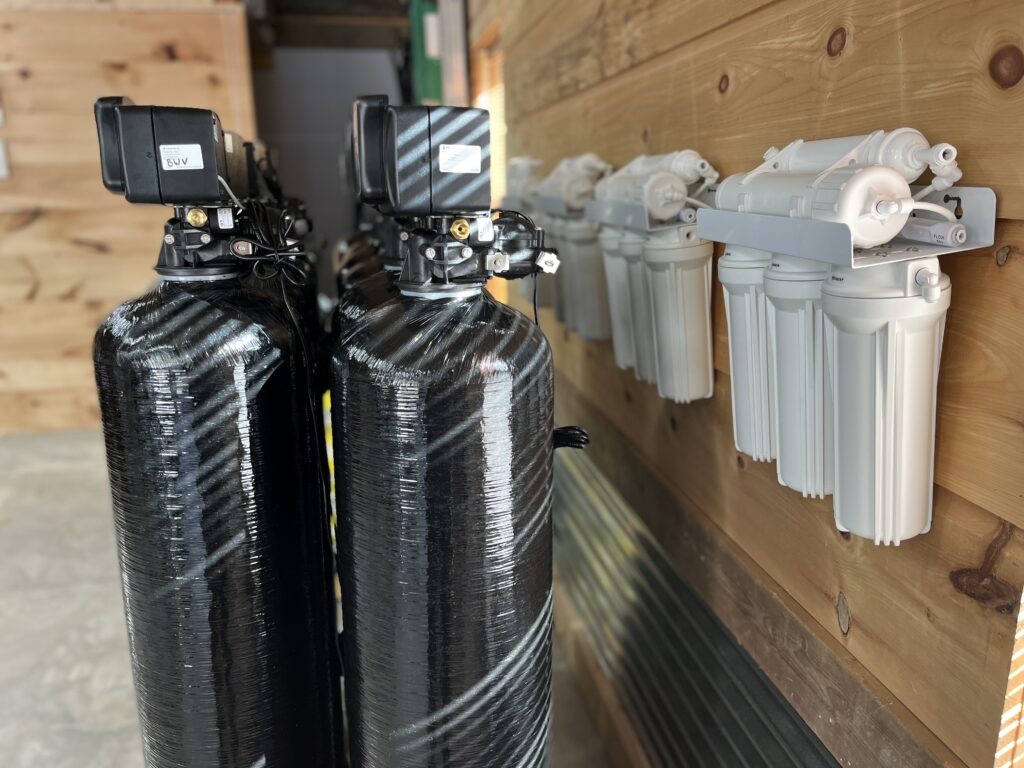
A point-of-entry system treats water as it enters the home, so showers, laundry, plumbing fixtures, and household water use can benefit from a solution selected for the actual water conditions.
A free water test gives the conversation a useful starting point. Recommendations should follow the water, the home, and the household’s goals.
Point-of-entry filtration can address specific taste, odor, sediment, or treatment-related concerns throughout the home when correctly selected and maintained.
Where hardness contributes to scale or spotting, a properly selected water softener or conditioning system can support fixtures and everyday water use.
Private well water can vary by location and season. Testing helps identify which treatment approach is appropriate for the observed conditions.
Municipal water is treated before delivery, but homeowners may still want to address taste, odor, sediment, or other household preferences.
Filters and treatment equipment need appropriate service. Second Mile helps owners understand replacement intervals and system upkeep.

Two Different Jobs
Whole-house equipment treats water near the point where it enters the home. Reverse osmosis is typically a point-of-use system installed for drinking and cooking water at a dedicated faucet.
Some homes benefit from one approach; others may use both. The right plan depends on the test results and what you want to improve. Explore reverse osmosis systems for focused drinking-water treatment.
See Reverse Osmosis OptionsWhat to Expect
We begin with a free water test and a conversation about taste, odor, staining, spotting, scale, or other observations.
We explain practical options based on the source water, household use, available space, and maintenance needs.
Equipment is placed and connected for its intended use, with attention to service access and a clean finished installation.
We explain filter changes, consumables, and follow-up service so the system can keep working as designed.
Local Service
Second Mile serves Bowling Green, Scottsville, Franklin, Glasgow, Russellville, Elizabethtown, and nearby Kentucky communities. Water-filtration service also extends into northern Middle Tennessee, including Gallatin, Hendersonville, Nashville, and Brentwood.
Water treatment should solve a defined problem. Our process centers on testing, straightforward explanations, correctly sized equipment, clean installation, and realistic maintenance.
Compare reverse osmosis service, learn about hard-water concerns and chlorine by-products, explore HVAC services, or request a free water test.
Common Questions
What does a whole-house water filtration system treat?
A whole-house system treats water near the point where it enters the home. The media and equipment should be selected for the specific concern shown by testing, such as sediment, taste, odor, or mineral-related issues.
Is whole-house filtration the same as reverse osmosis?
No. Whole-house treatment serves water throughout the home. Reverse osmosis is usually installed at one point of use for drinking and cooking water. Depending on the goals, a home may use either system or both.
Do I need a water test before choosing equipment?
Testing is the best place to begin because water conditions vary. It helps narrow the options and prevents choosing equipment based only on appearance, taste, or assumptions.
Do I need a water softener or whole-house filtration system?
They address different water conditions. A softener or conditioning system is generally considered for hardness and scale, while filtration is selected for concerns such as sediment, taste, or odor. Testing helps determine which approach fits the water.
Tell us what you are noticing. We will test the water, explain the results, and help you compare practical treatment options.